


Tbilisi Techno: The 48-Hour Rave Itinerary
Tbilisi Techno: A 48-Hour Rave Itinerary
Bassiani, KHIDI, sulfur baths and post-Soviet energy. The insider's guide to Georgia's capital — and the most political techno scene in Europe.
Key Takeaways
- Tbilisi isn't Berlin's cousin — it's its own beast. Post-Soviet, politically charged, fiercely protected by the ravers who fought police on the parliament steps.
- Bassiani is the gravitational centre — a stadium basement with a door policy rivalling Berghain and a sound system that deserves pilgrimage.
- KHIDI runs harder, colder, industrial. Mtkvarze is the elder statesman. Together they're the triangle that defines the city's weekend.
- Day recovery is the whole point: sulfur baths in Abanotubani, khachapuri and natural wine in Old Tbilisi, Fabrika for coffee and a moment to breathe.
- All-black, utilitarian, sigilism-marked. The Tbilisi aesthetic and the FERAL aesthetic are the same aesthetic.
Most travel guides to Tbilisi will tell you about the cobblestones and the hospitality. This one won't. You've got 48 hours, two nights, and a lineup you've been waiting on for months. We're writing for the person landing at Shota Rustaveli International at 8pm on a Friday with a Bassiani ticket in their phone and a bag full of all-black.
Tbilisi punches above its weight for reasons most weekenders never fully clock. This is a city that rioted for the right to rave. In May 2018, armed police raided Bassiani and KHIDI on "drug enforcement" pretexts that everyone understood for what they were — a conservative government testing how far it could push a scene that had become a symbol of queer, liberal, European-facing resistance. The response was the largest techno protest in history: thousands of kids dancing in front of the national parliament for two straight days, a Mayor Day protest disguised as a rave, or a rave disguised as a protest — depending on who you ask.
That's the weight you feel on the dancefloor here. It's not just Saturday night. It's a continuation.
Below — exactly how we'd spend 48 hours if we landed tomorrow. What to wear. Where to stay. Which sulfur bath to pick the morning after. How to survive the Bassiani door. And why post-Soviet, all-black, sigilism-marked FERAL pieces read perfectly here — because the Tbilisi aesthetic and ours were born from the same frequency.
Why Tbilisi — And Why Now
There are three reasons Tbilisi belongs on any serious techno traveller's list. First, the sound. The Funktion-One rig at Bassiani is one of the best-calibrated systems in Europe — a rig that has shaped the taste of an entire generation of Georgian producers (HVL, Zitto, Newa, Nika Pasuri) and attracts residents and guests you'd otherwise have to cross three borders to see.
Second, the politics. This is a scene with skin in the game. The clubs here aren't abstract nightlife businesses — they're explicit political projects. Bassiani's founders, Tato Getia and Zviad Gelbakhiani, have talked openly about building a space for Georgia's queer community in a country where homophobia is still normalised by the church. KHIDI's programming leans harder and more experimental, but the same ethic runs through both.
Third, the price. A flight from most European hubs is £80-£180. Bassiani entry sits around 50-60 GEL (£15-£18). A proper khachapuri dinner with natural wine will run you £12. The cost-to-quality ratio is the best in Europe for a proper techno weekend.
- £400-600 for 2 nights accommodation
- €25-30 club entry, €8 beers
- Tourist volume at peak venues
- Sunday brunch culture — cute, sanitised
- The scene the world already knows about
- £120-200 for 2 nights — central Airbnb
- £15-18 club entry, £3 beers
- Locals still outnumber foreigners 3:1
- Sulfur baths, natural wine, Old Town at 5am
- The scene Berlin ravers fly to when they need a reset
Day 1: Arrival, Warm-Up, Bassiani
Morning-Afternoon: Land and Post Up
Fly into TBS. Taxi into town runs about 30 GEL (£9) — use Bolt rather than hailing, the prices are fixed and drivers actually know where they're going. Stay in Vera, Sololaki, or Chugureti. Vera is leafy, walkable to everything, and full of wine bars. Sololaki is Old Tbilisi-adjacent with the most beautiful crumbling pre-revolutionary architecture in the city. Chugureti, across the river, puts you closer to Fabrika and some of the best independent cafes — our pick if it's your first time.
Avoid Saburtalo (sterile, suburban) and anything marketed as "Old Tbilisi luxury" on Booking — it's usually a wedding hotel that's not built for the kind of hours you'll be keeping.
Book a 3pm-check-in Airbnb with blackout curtains. You'll be sleeping through most of Saturday daylight. If the listing says "sunny south-facing balcony" as its main selling point, book a different one.
Evening: Warm-Up on Agmashenebeli
Pre-game on David Aghmashenebeli Avenue in Marjanishvili — the strip has been regenerated into Tbilisi's best bar street. Dive Bar for natural wine. Café Stamba at Stamba Hotel if you want something more elevated before the night. Don't drink hard. Bassiani doesn't open until midnight and you'll still be there at 10am.
Dinner at Ezo — a courtyard restaurant in a Soviet-era residential block, no sign outside, find it by the noise. Order the khinkali, lobio, and whatever house wine the owner brings unprompted. This is what most blogs mean when they say "hospitality" — it's real, it's overwhelming, and it will try to keep you there until 2am.
Late Night: Bassiani
Taxi to Dinamo Arena around midnight. Bassiani sits in the drained Olympic swimming pool underneath the national football stadium — you walk down a concrete ramp, past a security point, down another level, and into a space that feels less like a club and more like a cathedral that's decided to become something else.
The Door
Bassiani's door is strict but not arbitrary. They're screening out bachelor parties, aggressive men, tourists who've clearly come for the Instagram. What they want is ravers. Wear all black. Come in twos or threes, not groups of five. Know the lineup — they may ask. Speak quietly in the queue. Don't take photos. If you're refused, accept it gracefully and go to KHIDI instead. Arguing with Georgian door staff is not a strategy with a future.
Inside, the main room runs a resident-heavy programme — HVL, Kancheli, Irakli — with international guests most weekends (Héctor Oaks, Fadi Mohem, I Hate Models, SPFDJ, Marcel Dettmann have all run the room recently). The second room, Horoom, is Tbilisi's queer dancefloor — founded as a political statement as much as a musical one, and one of the most joyful rooms in European nightlife. Go. Even if queer nightlife isn't your normal lane. This is the emotional heart of Bassiani.
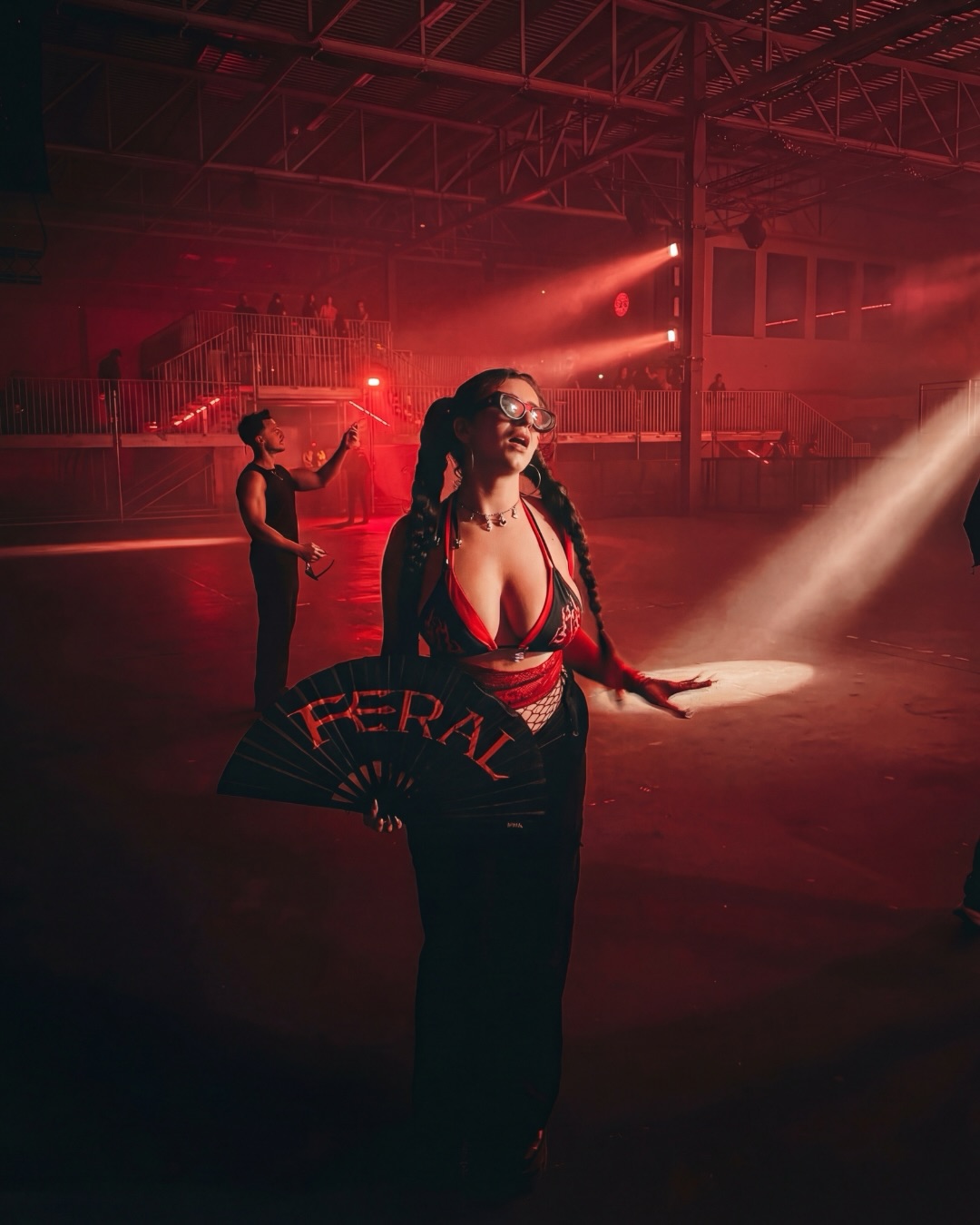
Leave when you leave. There is no last train. There is no "closing time" in any recognisable sense. The room will still be moving at 10am Sunday. Most locals stay until they're done, not until some external signal tells them it's over. This is the point.
Day 2: Recovery, Old Tbilisi, Night Two
Morning (Which Is Actually Afternoon): The Sulfur Baths
Wake up whenever your body allows. Drink water. Then: walk, stumble, or taxi to Abanotubani — the sulfur bath district in Old Tbilisi. The city was literally founded on these thermal springs; the name Tbilisi means "warm place". The baths are the single best thing you can do to your body after a Bassiani night.
Chreli Abano is the tourist pick — the blue-tiled facade you've seen on Instagram. Pretty, fine, overpriced. Bathhouse No. 5 (Samepo Abano) is the locals' pick — cheaper, better service, private rooms for 50-80 GEL an hour. Ask for a kisi — the exfoliating scrub — and brace yourself. You will leave as a new person.
Sulfur bath → Borjomi mineral water (Georgia's national hangover cure, tastes like pool water, works) → khinkali at Zakhar Zakharich → a single espresso at Coffee LAB. In that order. You'll be fit for another 12 hours by sunset.
Afternoon: Old Tbilisi, Narikala, Fabrika
Walk up to Narikala Fortress for the view — or skip the hike and take the cable car from Rike Park (2.5 GEL each way, pay with a Metromoney card). Wander back down through Old Town, ducking into wine bars, looking at the ironwork balconies that are either about to fall off or have been about to fall off for 150 years.
Cross the river to Fabrika — a converted Soviet sewing factory that now houses a hostel, coffee shops, independent record stores, vintage shops, and Tbilisi's best bookshop. The courtyard is where you reset. Sit outside with a flat white at Stamba Coffee, watch the Tbilisi techno scene openly recognise each other across the tables — because everyone was at Bassiani last night, and everyone will be at KHIDI tonight, and the scene is small enough that this is literally how people find each other.
Evening: Dinner, Then KHIDI
For dinner, break the rule about chasing traditional — go to Shavi Lomi in Chugureti for a modernised Georgian menu, or Culinarium Khasheria from the team behind Shavi Lomi, which is heavier and more rustic. Drink qvevri wine — amber, funky, made in clay vessels buried underground, entirely unlike anything in Western Europe.
Then: KHIDI. The name means "bridge" — because the club sits in the literal concrete under-structure of the Vakhushti Bagrationi Bridge. Industrial doesn't cover it. Cold concrete, exposed steel, low ceilings, harder programming than Bassiani. Where Bassiani has hypnotic and melodic sides, KHIDI leans into hard techno, industrial, experimental. If your weekend is: Bassiani Friday, KHIDI Saturday — that's the canonical ordering. It escalates.
KHIDI's door is more relaxed than Bassiani's. Still wear black. Still behave.
Beyond The Big Two
If Bassiani and KHIDI are both sold out, or if their programming doesn't suit, these are the rooms worth knowing:
What To Wear In Tbilisi
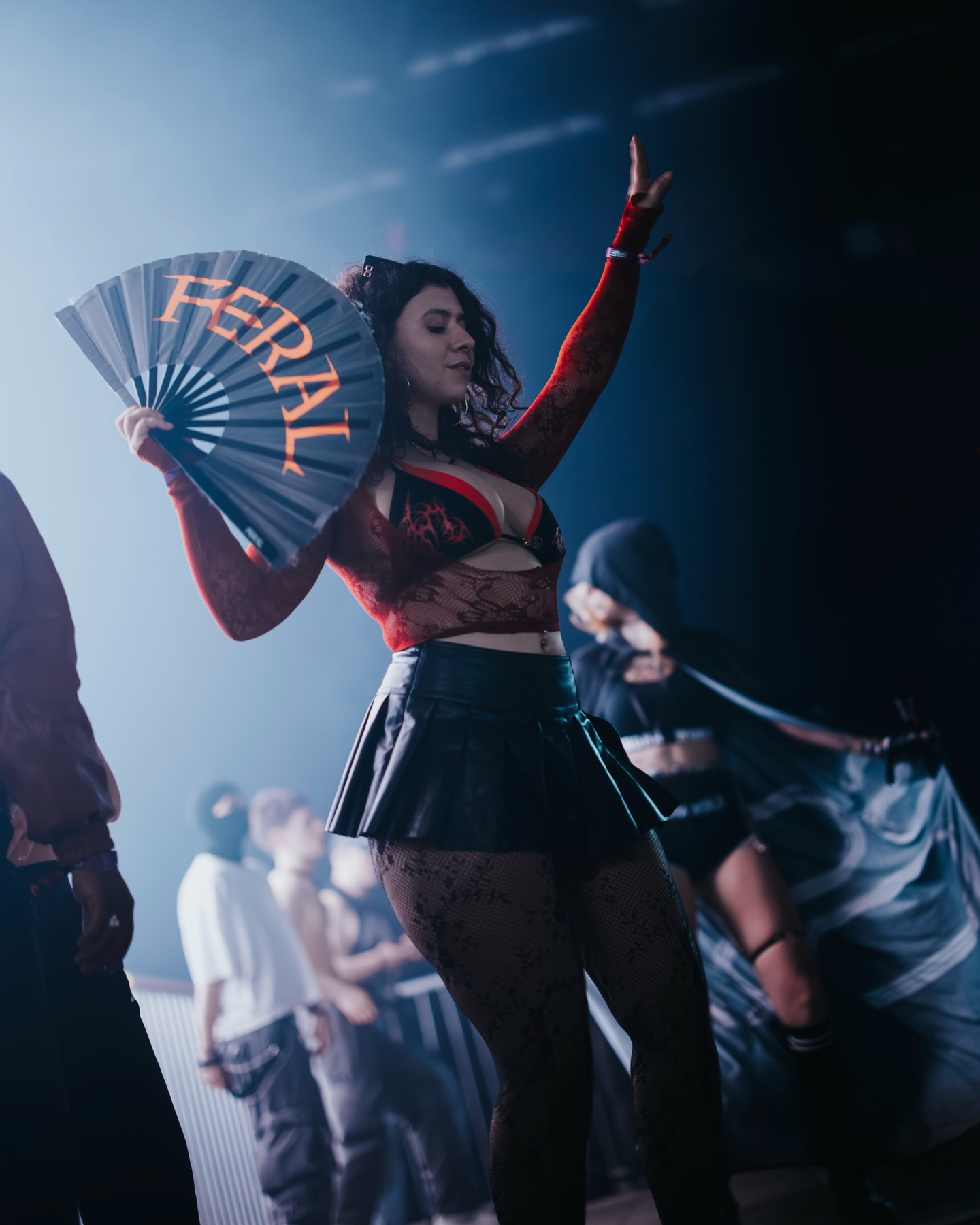
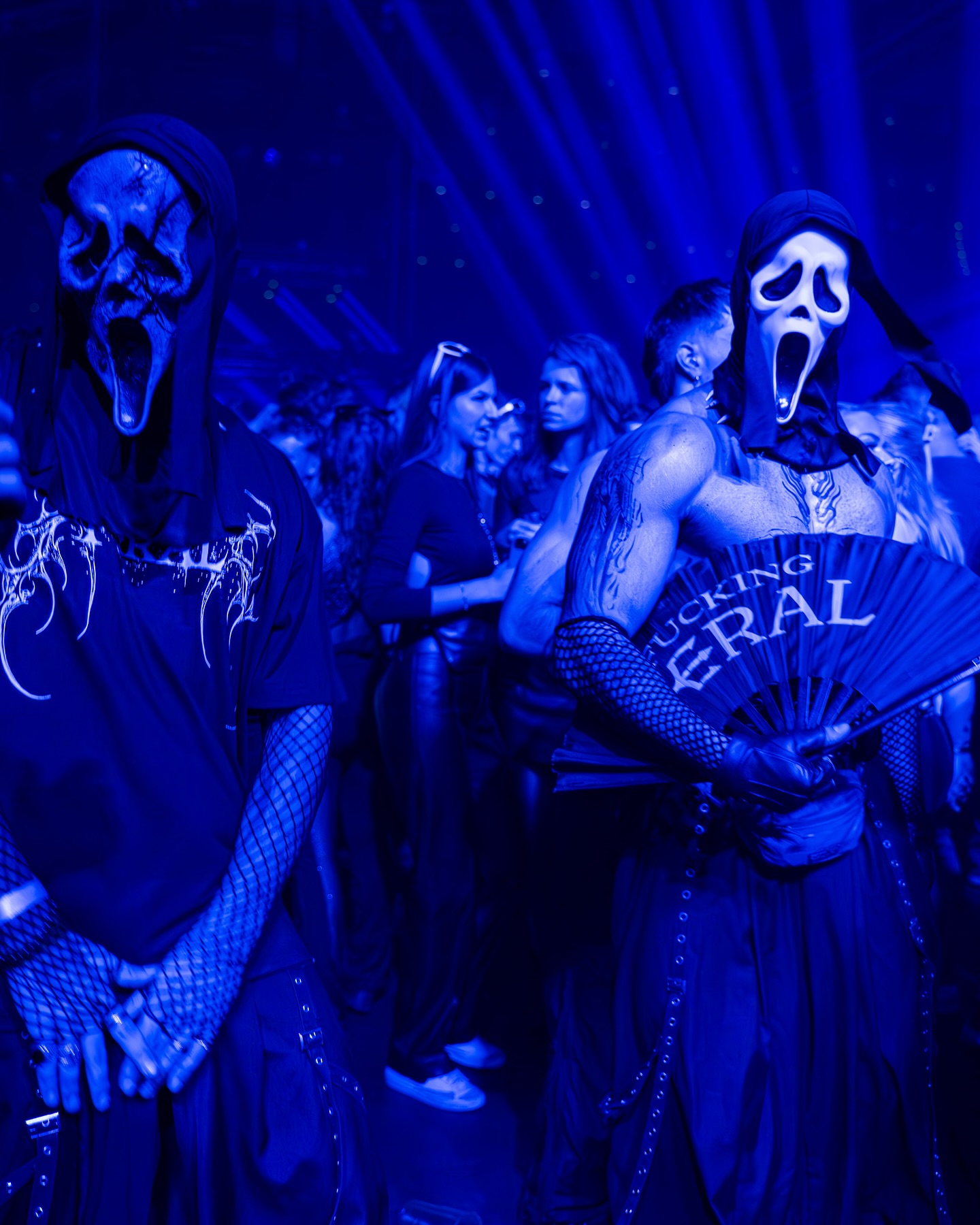
The Tbilisi dancefloor uniform is closer to Berlin than anywhere else in Europe. All-black, oversized, utilitarian. Post-Soviet aesthetics translated through a generation raised on Demna, Rick Owens, and the British techno scene. Heavy boots. Cargos. Technical outerwear. Sigilism or blackout — nothing flashy, nothing tourist-coded.
FERAL translates almost perfectly here. The cyber sigilism collection reads as if it was designed in Sololaki — dark, hand-marked, the aesthetic of a scene that has decided graphic design is politics. If you're building a 2-night wardrobe from scratch, this is the skeleton:
- Heavyweight black oversized tee (Night 1) 240gsm+
- Sigilism-marked tee or longsleeve (Night 2) Statement piece
- Zip hoodie — layer for the queue, strip for the room French terry
- Wide-leg cargo or technical joggers Black
- Chunky boots or clean black trainers Broken in
- Small crossbody — phone, wallet, earplugs, ID Black nylon
Read our complete men's rave style guide for the full breakdown — the rules that work for a London warehouse work at Bassiani, with one addition: sigilism is normalised here in a way it isn't anywhere else. Wear it without self-consciousness.
- Black, black, black — 80%+ of the room will be in it
- Layer — the queue is cold, the room is 34°C by 3am
- Closed-toe shoes you can dance in for 10 hours
- Small bag you can wear on the floor without losing it
- Earplugs — the Bassiani rig deserves your ears
- Colourful festival fits, UV gear, bucket hats
- Tourist "I'm in Tbilisi" souvenir layers
- Bare chests — door will read it as aggressive-male
- Strong cologne on a dancefloor that hot
- Flash jewellery or visible cash — unnecessary risk
Cyber sigilism, heavyweight cotton, all-black foundations. Built for 10 hours on concrete, not 10 minutes on Instagram.
Shop FERAL SigilismPractical: Visa, Currency, Safety
Visa. Georgia allows most EU, UK, US and Commonwealth passports 365 days visa-free on arrival. You fill in a card, you hand it back, you go. It's the easiest border in Europe.
Currency. Georgian Lari (GEL). Roughly 3.4 GEL to £1 as of 2026. ATMs are everywhere, most places take card, cash still preferred for bakeries, taxis, and tips. Bassiani is card-friendly. Keep 100 GEL in small notes for the bath house and the khachapuri place where no one wants to break a 200.
Language. Georgian is its own language family, written in its own script, unrelated to Russian or anything else you'd recognise. Don't try to learn it in a weekend. Russian works with the 35+ crowd. English works with anyone under 30. "Gamarjoba" (hello) and "madloba" (thank you) will get you through and be appreciated.
Weed. Personal cannabis use was decriminalised by the Georgian Constitutional Court in 2018. Possession for personal use won't get you arrested. Selling will. Import a stockpile across a border, also will. Be smart — this isn't Amsterdam, it's not openly sold, but nobody is getting busted for a joint in the Fabrika courtyard either.
Safety. Tbilisi is one of the safest European capitals for street crime. What you should be careful about: don't wear visible symbols of Russia (wrong kind of attention right now), don't get into political arguments with taxi drivers, don't walk into a neighbourhood you can't pronounce at 5am alone. General urban common sense. Queer travellers — you're safe in the scene (Horoom, Success, Bassiani broadly) but Tbilisi is not a place for public PDA outside those rooms. Read the room.
Pick up a Magti or Geocell SIM at the airport — 20 GEL gets you 30GB and you'll actually need it for Bolt, Google Maps, and the Telegram channels where after-party locations get dropped. WiFi in clubs is intentionally bad.
Read Next
Tbilisi is one stop. If you're building a wider techno travel year, these are the other deep-dives:
Frequently Asked Questions
Is Bassiani worth the hype?
Yes. Bassiani is one of three or four clubs in Europe that genuinely justifies being mentioned alongside Berghain — not because it's trying to be Berghain, but because it has its own Funktion-One rig, its own door ethic, its own political weight, and a resident DJ lineup (HVL, Kancheli, Irakli, Newa) that rivals any club on the continent. Go in without comparison expectations. It is its own thing.
How hard is the Bassiani door?
Strict but predictable. They screen out aggressive groups, stag parties, and obvious tourists. Wear black. Come in twos or threes. Be quiet and respectful in the queue. Know who's playing. Don't bring a DSLR. If you're refused, accept it and go to KHIDI. Arguing with Bassiani security has never worked for anyone.
What's the best neighbourhood to stay in?
Vera, Sololaki, or Chugureti. Vera is leafy and walkable to wine bars. Sololaki is Old-Tbilisi-adjacent with beautiful pre-revolutionary architecture. Chugureti is our favourite for a first visit — central, across the river from Fabrika, and close to the Bassiani taxi route.
When should I go to Tbilisi?
Spring (April-May) or autumn (September-October) are ideal — mild weather, full club programming, wine harvest season in autumn. Summer is hot (35°C+ in July) but the outdoor Left Bank programme comes alive. Winter is underrated — fewer tourists, cheaper flights, and Bassiani's peak season for international guest bookings.
Can I get into Bassiani as a solo foreigner?
Yes, but it's harder than arriving with one or two friends. Solo men face more scrutiny; solo women less so. If going alone, be extra quiet in the queue, know the lineup, wear obvious scene signifiers (black, sigilism, proper techno kit — not tourist wear). Horoom nights (queer-programmed) are more open to solo arrivals than mainline Bassiani Saturdays.
Is Tbilisi safe for solo travellers?
Among the safest European capitals for street crime. General urban common sense applies — don't flash cash, don't walk home alone at 5am into unfamiliar neighbourhoods, use Bolt rather than hailing. Queer travellers are welcome in the scene (Horoom, Success) but public PDA outside those spaces isn't the norm. Read the room.
What should I wear to Bassiani and KHIDI?
All-black, utilitarian, oversized. Heavyweight tees, zip hoodies, wide-leg cargos or technical joggers, chunky boots or clean black trainers. Sigilism and post-Soviet graphic aesthetics read perfectly here. Avoid colourful festival wear, UV gear, obvious tourist clothing. Layer for the cold queue and the hot room. See our full rave style guide for the complete breakdown.
How much money do I need for a 48-hour techno weekend in Tbilisi?
Budget: £300-400 including flights (from most European hubs), 2 nights accommodation, 2 club entries, food, taxis, sulfur baths, and spending money. It's one of the cheapest serious techno destinations in Europe — Berlin or Amsterdam will run you double for the same weekend.
Why does Tbilisi's techno scene matter politically?
Because it fought to exist. In May 2018, Georgian police raided Bassiani and KHIDI under "drug enforcement" pretexts. The scene responded with two straight days of dancing in front of parliament — one of the largest political rave protests in history. The clubs here are explicit political spaces for queer, liberal, European-facing Georgia. That history is in the room when you dance.
What's the best sulfur bath the morning after?
Bathhouse No. 5 (Samepo Abano) in Abanotubani — locals' pick, cheaper than Chreli Abano, private rooms for 50-80 GEL an hour. Ask for the kisi (exfoliating scrub). The sulfur content genuinely helps with muscle recovery after 8+ hours of dancing. It is the single best post-Bassiani move.
Stay bold, stay unique, and always — stay feral.